Showing posts with label java. Show all posts

Friday, January 22, 2010

Skaten - Acculturation of Islamic values with Local Culture


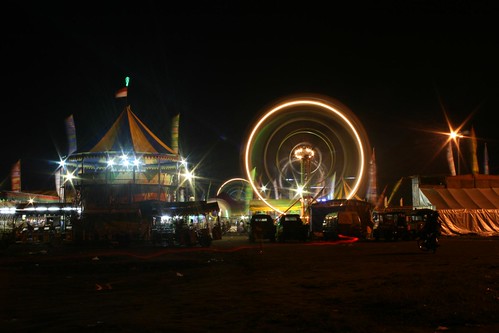
Sekaten-which is usually celebrated by most of the people of Yogyakarta and Surakarta - is a series of celebration activities Birthday of Prophet Muhammad which was held by Ngayogyakarta Sultanate Sultanate Palace, or Kraton Surakarta Kasunanan with government and local communities. Various forms of events and activities held in celebration Sekaten-diverse varieties and colors change over time-from the nature of religious ritual to the local tradition of art appreciation to exhibitions and fairs. Local culture and modern culture as if melted in the same time the momentum sekaten.

To determine the origin of each year sekaten held by two palace, we must menulusurinya from Demak era. This kingdom is the first Islamic kingdom in Java that stood after the Majapahit collapsed in the Saka year 1400 or 1478 AD. Commemorated by the collapse of Majapahit candrasengkala "Sirna Kertaning Missing Earth". The end of the Majapahit Empire also means ending the Hindu kingdom in Java, under the reign of King Brawijaya V. The first king of Demak was the title of Raden Patah Sultan Petty Officer.

As the King of Islam, Raden Patah always working to advance the Islamic religion tersiarnya throughout the kingdom. Sultan NCO is always thinking about how to the Islamic religion can shine all over the country, and how the people who have embraced the Hindu religion it would insyaf and believe the truth of Islamic teachings.



For the sake of these ideals, Raden Patah finally held a meeting with the trustees of nine, among them the Sunan Ampel, Sunan Gresik, Sunan Giri, Sunan Bonang, Sunan Kudus, Sunan Muria, Sunan Kalijaga, Sunan Drajat, and Sunan Gunung Jati. The meeting discussed ways to broadcast Islam in Java. Sunan Kalijaga broadcasters have suggestions about Islam to be accepted by the society since ancient Hinduism. Sunan Kalijaga proposal is to allow permanent implementation of custom or procedure in the Hindu religion, but it entered the Islamic subjects, such as:

1) Semedi
Meditation in the Hindu religion has a purpose to worship the gods. Because Islam does not
recognize the gods, then replaced with the worship of Allah SWT with prayer.

2) Offerings
Offerings according to the Hindu religion has a purpose to give food to the gods and demons,
to conform with Islamic teachings replaced by nature due to the poor.

3) Crowds
In the Hindu religion has a purpose of saluting the crowd to the gods, saluting the crowd
substituted-day Islamic holiday.

Because people like the Javanese gamelan, and the Islamic feast day of the birth of the Prophet Muhammad, the mosque should also be held in gamelan percussion, so that people interested. If you've assembled and then given a lesson about Islam. And for this purpose, the trustees created a set of gamelan Kyai called Sekati.

The proposal from Sunan Kalijaga, agreed by the other guardians and Raden Patah, the day of birth of the Prophet Mohammed, 12 Mulud gamelan in the mosque was hit. On 12 Mulud than a day of Prophet Muhammad's birth is also the day he died. Apparently a lot of people who flocked to the mosque to listen to the sound of the gamelan. People are coming to mosques despite his distant, so they spent the night in the square or around the mosque.

On the birthday of the Prophet Muhammad, in addition to the people, the regents also came to the coastal city of the kingdom to give worship to the king. They came a few days before the date Mulud and made 12 houses in the square for the night. Regent to the king and then led the king to the mosque. Since the number of people who led the king, comes the word "Garebeg" which comes from the word "anggrubyung" which means lead.

The people who came in the courtyard of the mosque were told to listen to speeches about the teachings of Islam that is easy-easy first. First they were told that is the creed and how it goes. That arise from sekaten word that comes from the Arabic "syahadatain". Credal sentence is a sentence that should be read by anyone to convert to Islam, which has a meaning: there is no god but Allah and Muhammad is the messenger of God. Creed sentence was also written on the gate of the mosque. Because many people came flocking to the mosque and many are overnight, so many people are selling at around the mosque and the square.

Sekaten than syahadatain derived from the word, also derived from the word:

1) Sahutain
To stop or prevent the case two, the nature of the prostitute and perverted.

2) Sakhatain
Eliminate the case of two, namely the character of animals and nature of the character of
satan as the source of damage.

3) Sakhotain
Menamankan case two, always to maintain the holy mind or mind sublime and always thrall
to God.

4) Sekati
Equilibrium, the living must be weighed or judge things good and bad.

5) Screen
Borders, the living must limit themselves to not do evil, and know the limits of good and evil.

Sekaten tradition that is celebrated to commemorate the birthday of Prophet Muhammad is still preserved by the kings who ordered subsequent to the time of Mataram. At the time of the Mataram kingdom until it moved to Surakarta and Yogyakarta, sekaten held for political purposes, namely to know the loyalty of the regents of the region of the kingdom. In celebration of the regents sekaten must come to offer tribute and to offer worship, devotion to the king. If the magistrate is unable to attend, it must be represented by the kingdom. This was done because if the magistrate was not present at the celebration sekaten interpreted as a form of defiance against the king.

Sekaten celebration held by the kingdom of Mataram, but aims to commemorate the birth of Prophet Muhammad also to show that the king who ruled there was a relationship with the Prophet Muhammad, the messenger of God. Sekaten also has political and economic roles. Because the sekaten, the regents must give tribute sowan and sekaten presence in the ceremony as a sign of loyalty to the king who ruled.

With the times, sekaten also used in the trade sector. Sekaten celebration as a community farm to trade and create a vivid celebration of the sekaten. In addition to listening to the gamelan, the visitors can buy a variety of traditional foods sekaten, as well as children's toys.

From here, can we conclude that looked Sekaten not only in the frame as such a religious perspective or the lens of local culture-the culture of Java - alone. Such perspective would lead to distortions that tend to raise the debate that never ends. The debate will lead to the problem of interpretation of religion - the normative and historical dimensions as well as Islamic and das sein das sollen - and lead to division and disagreement if the difference is not framed in an effort to obtain and strengthen the fabric of "ukhuwah" Islamiyah, Wathoniyah , and Basyariah.


Tuesday, January 19, 2010

Batik Course - Hand-made Batik to Batik Painting


Visiting Yogyakarta, you may not just buy and enjoy the marvelous batik artwork, but you have the opportunity to learn the technique of its production. The valuable opportunity packed in an interesting tour package with quite short duration and affordable cost will surely be fun.

Batik patterns you can learn involve hand-made batik, printed batik and painted batik. Each place usually has its special batik pattern to teach. For one day course, it is usually divided into two sessions; you will learn all processes of batik making that generally consist of pattern making, cloth coloring, wax dying and drying.

The process of pattern making starts when all materials, especially the cloth are ready. The making of this pattern is done with wax as the main material that is used to block color. If you want to make hand-made batik, the pattern making is done by using the wax pen called canting while printed batik is made by utilizing a prepared copper stamp with certain design.


You are free to choose the pattern you are going to make. Unique patterns you can make are, for example, ceplok, cecek sawut, and semen. You can find all of the patterns in historical buildings in Indonesia. Ceplok pattern can be found in Borobudur Temple; cecek sawut in a copper drum in Copper Time while semen pattern can be found in the tomb of Kalinyamat Queen.

The process is continued by coloring the cloth. The cloth with pattern on it is dipped into a bucket filled with coloring agent. This process seems simple, but actually it is difficult, moreover if batik must be colored more than two. Many batik artisans still use natural colors made from certain natural materials, but there are many who use synthetic coloring agents.

After coloring thoroughly, the process is continued by dying the wax, or removing the wax attaching to the cloth. Initially, prepare the boiling water mixed with soda ash and finally the cloth is dipped to remove the entire wax. If there is still wax attached, it must be cleaned after the dying process.

The final step is washing. When using natural coloring agent, the washing cannot be done by using detergent that will damage the color. After being washed, the cloth is dried under indirect sun to avoid discoloring. After this drying process, you can see the difference of batik colored with natural coloring agent; the color is usually less bright.

Batik courses in Yogyakarta provide professional instructors to make you competent even though with short course only. Some places also have instructors speaking foreign languages, especially English, to ease you understand the lesson.

One of the places providing batik course is Sanggar Kalpika in Kampung Taman, at the west of Tamansari. There, you can learn painted batik. If you prefer to learn hand-made and printed batik, Balai Batik is the right place. The institution that is located on Jalan Kusumanegara provides special staff and room for you to learn batik. The cost ranges from IDR 250,000 to IDR 1,500,000 based on the course types.

In addition to learning batik, you can also enjoy the activity and the works of batik artisans in Kampung Taman that 30 years ago has been developing painted batik. You can also see various batik styles exhibited in Balai Batik.

source : yogyayes

Eating Turi Flower Pecel by Mbah Warno "Anderson"


At first, I was confused by the name of Baywatch pecel owned by Mbah Warno eatery. Passing in my mind, a naughty imagination of a naughty waitress wearing bikini like what Pamela Anderson wore on Baywatch serials or at least it's located on seashore area.

Mbah Warno eatery is located at Kasongan, at the street heading to Sempu Mountain. This place was established 35 years ago and it has a very simple interior. The banner has 30 cm long and 20 cm width which can be easily skipped for those who don't pay attention to it. The interior is totally equipped by simple functional equipments. Only tables and wooden chairs. Behind the table, there're some braziers which always produce smokes. A peculiar position which accidentally designed like that because kitchen in javanese concept is always put at the back of the house but Mbah Warno put his kitchen in front of his eatery after the earthquake accident and he simply said due to the financial constraint he did it.

Mbah Warno serves main menu which is pecel accompanied by some meals starting from fried ell, bacem tofu, lele and mangut ell (ell with coconut milk and chili) and fried noodles. Yogyes ordered everything to taste all Mbah warno culinaries.


During the time of waiting, my mind flew to track down the origin of pecel which is as little known as soto. Many regions in Java have their own pecel with their own characteristic such as Madiun, Blitar, Madura, Slawi and etc. But for at least, a dutch historian enlighted with the fact when Ki Ageng Pamenahan undertook Sultan Hadiwijaya's instruction to proceed to a jungle named Alas Mentaok (now, Kota gede), his groups were welcomed by the opak river-side inhabitants and then they're given some foods including pecel.

My reverie was suddenly cut by the arrival of my pecel and some other meals on the table. A portion of pecel, fried lele and bacem tofu somehow challenged me to eat them as soon as possible. There are four kinds of vegetables which are spinach, papaya leaves, Turi flower (Sesbania grandiflora) and poured by nut sauce which is so yummy. We’ll have sweet flavor from nut sauce and bitter flavor from Turi flower making an unexplainable delicious mixture.

Pecel with Turi flower is the symbol of Ndeso pecel. In this age, it's hardly ever seen a pecel seller packages a kind of it. It's deemed that Turi flower has the benefits of alleviating high body temperature and headache. No wonder, some javanese, indian and Suriname (their ancestor is still javanese though, LOL) still consume young Turi flower as their vegetable.

Pecel will be more delicious by adding with fried lele or Bacem tofu. This lele is fried until very dry so that it's really crispy when you have a bite. And bacem tofu is quite big so you can eat it by combining with some small chilies. Apart from it, you can also have fried ell that has two different sizes and also you can have fried noodles and mangut ell for those who think that spicy is the best one. Smoke from brazier also adds more sensation to this place.

I don't know whether it's caused by my full stomach or effect of Turi flower, after eating, my head was way much smartier than usual. During the small conversation with Mbah Wartno and his assistant, i suddenly understood why pecel at this place is called Baywatch pecel. Apparently, Mbah Warno and his assistants always wear clothes called Kutang. These clothes are really comfortable to wear in the hot and dry weather of Kasongan village, Bantul.

Even though, many people sell pecel everywhere, Baywatch pecel still offers something new for you. A great combination of delish foods, strong village ambiance and hospitality of Mbah Warno "Anderson".

Beringharjo Rice Fried Yogyakarta (Indonesia)


Beringharjo Fried Rice, can now be found on Jalan Mataram, right of the third T-junction on the left side of the street leading to the historical market in Yogyakarta. Before the end of the year 2004, when the food stalls were still open in the area, the fried rice was found on the T-junction leading to Shopping area that now is changed into Taman Pintar, Taman Budaya Yogyakarta and the center of book shops.

This fried rice is worth trying because many people acknowledge its deliciousness since the owner started its business in 1960s. You do not have to wait for the menu to be served since the seller has cooked them in big portion. It starts open from 06:00p.m to 11:00p.m. with cross-legged and chairs seating arrangement.

Eating this fried rice, you feel like listening to a plate of story about Javanese-Chinese acculturation. Fried rice itself actually originated from China and immigrated to Indonesia. Initially, fried rice existed from Chinese tradition that prohibit throwing uneaten rice, so that the rice was processed using available ingredients such as onion, garlic, and ketchup. When Chinese people came to Indonesia, such a cuisine was known by Indonesians as well and started to mix with Indonesian cuisine.

The acculturation can be seen from the variation of fried rice, from chicken fried rice, seafood fried rice, mutton fried rice, and even pete (beans with pungent odor) fried rice as Indonesian special ingredient. The taste also varies; some accentuate the taste of garlic and some accentuate the taste of additional material such as chicken. Beringharjo Fried Rice chooses to cook chicken and pork fried rice.

Speaking of ketchup as one of the ingredients, it also keeps story about acculturation of Chinese people living in Java. Ketchup, actually was named kie tjap, is made of fermented fish concentrate. When Chinese people living in Java found that soybeans were cheaper than fish, the raw material of ketchup making was changed to soybeans. Consequently, it did not have fish taste; it only tasted sweet for sweet ketchup that is used to cook fried rice. Strong taste of garlic also becomes characteristic of Chinese cuisine.

Although there are many fried rice sellers, Beringharjo Fried Rice is still special. The process of cooking, for example, is in big portions. As much rice as half of a big rice basket can be cooked at once in a very big pan. The ingredients are very special since they have been mixed at home and ready to use.

Chicken or pork is added when the fried rice is on the plate. Besides, slices of fresh tomato, cabbage, celery, omelet or pickle are additional. A plate of fried rice costs IDR 5,000 for chicken and IDR 6,000 for pork. Some customers even order one and a half or even two portions at once because of its deliciousness.

The taste is just right, not too sweet nor too salty. The aroma of garlic is not too strong yet tasty. Are you interested in tasting? You can have other menus such as fried noodle and pork cooked with ketchup that are not less delicious.

source : yogyayes

Taman Sari Palace Yogyakarta (Indonesia)


This park was built by Sultan Hamengkubuwono I in 1757. He created a new architectural style is a mixture of Javanese and Portuguese style. At first Taman Sari is a beautiful water garden and charming. The area east of the park up to the crossroads town called Suryoputran. Segaran in Javanese means of artificial sea. Every time the Emperor visited the park, he would row his own boat across the suspension bridge is called 'Kreteg Hanged' is located in front of the gates of the Palace, to the south or north Kemandungan. Another part of the building that used to connect to the suspension bridge can still be seen.

Apart from water transport, there is also an underground road or tunnel from the Sultan's Palace that led to one of the buildings in the park called Ledok Pasarean Sari, which is where the clash and the Emperor's personal. Well there is also Gumuling, ie, two-story building with a floor underneath lies below ground. In the past, this building is a kind of where the Sultan surau Prayer worship that can be achieved through one of the underground tunnel in the park complex. In addition, there are still many underground passageway, which was once used as a way of saving at any time when this complex enemy attack. To the north lies the complex essence Park Ngasem market (bird market), where this place sold various types of animals and birds.

Formerly Water Palace is not just a beautiful park but also used for shelter. When the enemy attacked the Palace, the Sultan and his family escaped through an underground road. By the time they were in a safe condition, the floodgates will be opened so that water would be running down the street and drown the enemies in pursuit.


In one part there is a section called Pulau Kenanga because in the courtyard Kenanga trees grow (Canangium Odoratum. Bunga Kenanga fragrant smell spread throughout the park.

Tall buildings such as the pool was built specifically for use by the Sultan and his family to bathe. The buildings have been renovated including the underground path to the west, the fortress that surrounds the Palace and the southbound direction of a small village called Krapyak.

Besides enjoying the ancient buildings, tourists can also visit the many shops and art galleries along the alley / lane. Batik can be found easily in shops and galleries are. Once this area is a place for artists Palace.

Now, Castle visited by many tourists, who can enjoy the beauty of the park from 08.00 to 16.00 WIB.

Location: Jogja
Transportation: - Bus Route 9 lines, 12 and 15 - Personal Vehicle

Vredeburg Fort Yogyakarta (Indonesia)


Location Vredeburg Fortress dealing with the Great House. The fort was built in 1765 by the Dutch in the Dutch power to protect the residence of the Dutch rulers of Yogyakarta Kingdom cannon attacks. The fort is also surrounded by a moat, which until now still can be found there.

The fort is a square also has a control tower at the four corners and sides that allow the Dutch to walk around while on guard and opened fire when needed. On the basis of a cannon at the southern stronghold, Sultan's Palace and several other historic buildings including the surrounding traffic densities seen clearly. The fort is located not so far from downtown, and within walking distance of downtown.

Yogyakarta Palace (Indonesia)


More than 200 years ago, the place where the Sultan's Palace are now in a marshy area known as Pachetokan Bannerman, who later built a rest house named Ayodya. Sultan's Palace facing the north, on the north south axis, between the mountains and the sea south trim. In the palace hall, the scene can be witnessed pisowanan (supreme court) where the Sultan sat on the throne stakeholders faced court office.

Donopratomo Regol Sri connecting pages with the page core Manganti palace, guarded by 2 (two) sculpture named Dwarapala Cingkarabala and Balaupata, which represents both the human personality, who always uses her voice to always do good and forbid evil. At the core of the palace yard, can be seen where the Sultan lived used to receive guests of honor and a party. In this place there is also a place to stay keputren or daughters who had married the Sultan. Yogyakarta palace complex can be visited by the general public from 07.30 until 13:00 every day. Certain days, closing on Friday and open until 12:00 o'clock.

Glagah Beach Kulon Progo (Indonesia)


Glagah beach is located about 40 km southwest of Yogyakarta in Kulon Progo district. Serang River which flows into the estuary to the sea south of this beach. On all sides of the river is shaded green and overgrown with palm trees. This place is ideal for camping or just relaxing. The local government has built this beach area with various recreational facilities such as parks, swimming and fishing camp. Before reaching the beach there Serang river, where sports fans can meperoleh rowing facilities (canou). Glagah beach is about 1.5 kilometers from the coast Congot, Kulon Progo Regency, which both have been associated with a paved road. Sightseeing Glagah beach attraction is a big wave, a long coastline, cool air and clean water. Advantage of this tourist attraction is the presence of Serang river which empties into the beach Glagah that can be used for tourism tirta. This activity is carried out in Serang river. Visitors who already use the river Attack tirta tourism activities, mostly tourists, nature lovers, especially students from universities in Yogyakarta.

In addition tirta tours, special interest tourism activities undertaken is a form of sporting event. Event ever held at the Beach is a championship motocross Glagah to the regional level. This event is able to attract visitors, both as participants and as spectators. Planned motocross championship held every year fighting the rotating trophy Regent Kulon Progo. Another event held in Glagah Beach is a national championship beach volleyball in 1997.


Glagah beach also has the attraction of cultural tourism, which Merti ceremonial village. This ceremony is performed for the safety of villagers Glagah. The activities of the local arts performances such as puppets and Jatilan. In addition to the Village Merti ceremony, the beach is also used to Glagah Labuhan ceremony of Breeds Mangkunegaran.

Location: Kulon Progo
Transportation: Bus Yogyakarta-Purworejo

Batik Craft Yogyakarta (Indonesia)


Batik is a unique work of art. A combination of artistic expression with technical skills that exist only in Indonesia. By using wax and dye materials dyed, batik is made on a piece of cloth. As well as the other predicate, Yogyakarta is also known as the city of batik.

Based on the technique used, divided into Ketegori batik: batik, batik print and a combination of both. Working with batik tool called "canting" made of brass or copper with varying motives, whereas the combination of batik is batik canting resulting from the combination and mold. Batik quality is determined by the level of difficulty motives, techniques and materials manufacturing base fabrics. At first the colors and motifs were very influential in nature, especially flowers and plants such as jasmine, mythical animals such as bird Garuda. The dominant colors used are blue or black, is a symbol of water and air. The colors are then to be two basic elements. Symbolically, the two colors into the background of traditional batik designs in Yogyakarta and Surakarta.

Location: Province of DIY

Goa Cerme (Bantul)


Goa Cerme at first was a meeting place used by Walisongo to spread Islam in Java. The word 'Cerme' comes from the word 'speech', held talks during the meeting discussed a plan to establish in the Great Mosque in Demak, a city north of Central Java.
The average depth of water flow of about 1 m, ends at the village exit gate Ploso, Giritirto, Bake, Gunung Kidul Regency.

In addition to the main cave is another cave in which the smaller was used for the meditation cavernous puppeteer. Goa Ledhek, Badhut cave, and caves People. On Monday or Tuesday wage pengunjng many have come to ask God's blessings with thanksgiving ceremonies. During the holidays, many students and young people visiting this temapat. Along the corridor in a cave there is a stage Cerme which was used for the rendezvous.

To reach the front gate of the cave, one must climb the stairs 759 meters. It's better if visitors contact Interpreter Lock or guardian first cave to get the information or correct information.

These include caves Goa a long and deep. The entrance was in the village Selopamioro, kecamatam Imogiri, Bantul regency, while the exit was in Ploso village, subdistrict Bake, Gunung Kidul district. Total length of cave approximately 1.5 km.

Way to achieve this very good location and distance of about 20 km. The view towards the village of Goa last Cerme very good. In the daytime, when the weather sunny, the city of Yogyakarta looks beautiful and at night could see the lights of the city.

Conditions in the cave without lights (flashlight) / dark and cave floor flooded by ground water, which in the rainy season the water will put (up), but in the dry season the water subsided (down). Can also be found Stalactite and stalagmites are very good, too many bats. In general, foreign tourists who visited the cave Cerme spent between 3 to 5 hours on location.

Complex Ratu Boko


King Boko Palace is located about 19 km east of Yogyakarta, about 2 km from the temple of Prambanan. Surrounding landscape is very beautiful. In the south dimly visible expanse of the south coast and the north was clearly visible Merapi Mountain, Prambanan Temple and Kalasan. From the main entrance to the right, you will enter into a large room palace. To the left of the big room there is a pond that was used for bathing the women.

This palace was built by Balaputradewa estimated, contemporaneous with the construction of the Prambanan Temple, and is intended as a strategic defense of the power influences Sanjaya Dinasty. From the height on the hill, easy opponent will be carefully monitored.

Petilasan has aesthetic value (beauty) high, which implies the form of gate and the remains of the palace porch pillars are still visible beauty, harmony with the natural beauty sekekilingnya. On the inside of this petilasan found the remains of keputren (residence) and the princess siti hinggil now in the process of restoration. Keputren is equipped with a predicted baths used to be the daughter of Queen Boko mingle, known as the Roro Jonggrang, whose statue now occupies one of the stalls of the main temple complex of Prambanan.

Location: Sleman District
Transportation: Temple can be reached by public transportation from Yogyakarta that led to the city of Solo, and get off at the intersection of three to Prambanan Piyungan. Next trip continued with another transport that led to the BIF, and then get off at Bokoharjo located in the foothills of Boko. From these stops, the journey continues on foot through the uphill path approximately 400 meters. If you bring two-wheeled vehicles, can pass the Palapa Earth Stations located in the same location.

Friday, January 2, 2009

Banten

Banten is one of the young provinces in Republic of Indonesia. This region is situated in west Java. It can be reached about an hour from Jakarta. It's feel unbelievable, after the busy toll-way and hectic Jakarta as metropolitan city; we enter small and charming Banten. This city has a lot of treasure to whom that likes history. Such as the ruins of Surosowan Palace, Kaibon Palace, 'Masjid Agung Banten' [Banten Great Mosque, enlisted in Moslem's pilgrimage in Indonesia], Speelwijk fortress and Chinese temple Avalokiteshvara, and the harbor of Banten, Karanghantu [devil rock's harbor] that still used nowadays already existed since centuries ago. From this place, Sultan Banten's troopers took fight against the pirates and take defense from the Dutch.

Along with the prevailing regional government changing, in respect to the insistence of Banten People's aspiration to demand the separation from West Java Province, and after long process based on Law Number 23 Year 2000 concerning on Formation of Banten Province dated 17th October, 2000, established Banten Province as the 30th Province. Banten Province consists of 4 Regencies and 2 Cities, 94 Districts, 128 sub districts and 1,339 Villages. Geographically, the location of Banten Province is strategic because of the link between Java Island and Sumatra Island as well as the capital of Republic of Indonesia and West Java Province as a potential market of Banten's products.

The economic sector, that have a great potential resources and various to be developed, namely sectors in agriculture, industry/trade, tourism, mining/exploration, and also supported by the availability of variety natural resources in great amount. Industry sector contribute more than 52 % from total of Banten's GRDP, because in Banten there are 17 Industrial Zones equipped by good facilities and managed by professional private companies.

Banten is one of the newest provinces in Indonesia and also one of the richest. The province combines many of the most important Industrial Zones in Indonesia and also has the extended recreation areas along the western coast of Java and in south the Ujung Kulon National Park and the mountainous areas that are home to the Baduy people. Banten has the easiest access to Jakarta being merely an enclave in this province.

This province uses its own unique culture and language, both called Sundanese that is also used to call its people. The ancient kingdoms of Banten are Tarumanegara, Pajajaran, Banten and Cirebon would make interesting studies for the student of archaeology. Cirebon is located on the border between West and Central Java, having a mixed culture originating from the ancient Cirebon and Banten kingdoms, resulting in similar customs and dialects of the two people, although Banten city is located at the extreme western part of the province. Banten city on Banten Bay was one of the first places to begin trade with the Dutch. There is little to see of the past glories of this area today with the exception of the Grand Mosque, which was completed in 1599 and is certainly worth a visit.

The Province has a great number of attractions, from the wildlife reserve of Ujung Kulon on the southwestern tip of Java and the isolated communities of the mysterious Baduy to the unspoiled beaches. The villages are busy and attractive and the pace of life gets slower as we move towards the National Park in the southwest. From any point along the western coast we can see the "son of Krakatau" volcano, which rises impressively from the sea. Banten offers many different recreational experiences. The trip to Anyer area from Jakarta is now quick and easy because of the toll road, which connects Merak port with Jakarta. As we move further south along the west Java coast the lifestyle becomes more relaxed and after Labuan we move into more rural areas where the road conditions worsen and the lifstyle is relaxed. Here access to the forest areas begins and we can move back in time and enjoy the peace of nature. There is a bus each day from Labuan to Taman Jaya, which is on the edge of Ujung Kulon national park. There are simple cabins can be hired and a ranger can then take us on a walk into the park. It takes about six hours to reach a camping site.

Geography
The total area of Banten is 8,800.83 Km2, consisting of 4 Regencies and 2 Cities, which are divided into as follows:
- Serang Regency: 1.724,09 km2
- Lebak Regency: 2.859,96 km2
- Pandeglang Regency: 2.746,88 km2
- Tangerang Regency: 1.110,38 km2
- Cilegon Town: 175,50 km2
- Tangerang Town: 177,20 km2 _
Banten region is surrounded by Java Sea in the North. Sunda Straits in the West, and facing the India Ocean in the South. These make Banten as a region with very great of sea product resources.

Demography
Total population in 2001 was 8,258,055 persons, consists of 4,231,079 men (51.24%) and 4,026,976 (48.76%). The densely populated regency is in Tangerang with its total population 2,873,256 persons. The highest density Region is Tangerang City 7,362.26 persons/Km2 in 1990 until 2001 period. Population growth from increased at 2.99%/year. Total workforce or aged 15 years above in 2001 was 3,330,224 or 52.57%.

The coastal city of Banten, 75 kilometers west of Jakarta on the northern coast of Java, was one of the Asia's largest cosmopolitan trading harbors in the 16th and 17th century. Ships visited its port from Malacca, China, Vietnam, India, Arab, Portugal and Netherlands. At its peek, it was almost as important as Amsterdam. Nowadays Banten is only a small fishing village. There are still old buildings left which are worth a visit for someone who is interested in the history of Indonesia before and during the colonial times.

Jakarta

Jakarta is the capital city of the Republic of Indonesia, a country composed of more than 13,000 islands with a population of over 180 million. Comprising more than 300 ethnic groups speaking 200 different languages, the Indonesia population exhibits marked diversity in its linguistic, culture, and religious traditions. As the Capital City, Jakarta is a melting pot of representatives from each of these ethnic groups. Jakarta is a special territory enjoying the status of a province, consisting of Greater Jakarta, covering of 637.44 square km area. Located on the northern coast of West Java, it is the center of government, commerce and industry and has an extensive communications network with the rest of the country and the outside world. Strategically positioned in the archipelago, the city is also the principal gateway to the rest of Indonesia. From the Capital City, sophisticated land, air, and sea transport is available to the rest of the country and beyond.

Jakarta is one of Indonesia's designated tourist areas. It is a gateway to other tourist destinations in Indonesia and is equipped with all the means of modern transportation by air, sea, rail, or by land. It has the largest and most modern airport in the country, the most important harbor in Indonesia and is well connected by rail of good roads to other destinations in Java, Sumatra, and Bali. As Indonesia's main gateway, Soekarno-Hatta International Airport serves a growing number of international airlines and domestic flights. Jakarta is a city of contrasts; the traditional and the modern, the rich and the poor, the sacral and the worldly, often stand side by side in this bustling metropolis. Even its population gathered from all those diverse ethnic and cultural groups, which compose Indonesia, are constantly juxtaposed present reminder of the national motto; Unity in Diversity.

Finding its origin in the small early 16th century harbor town of Sunda Kelapa, Jakarta's founding is thought to have taken place on June 22, 1527, when it was re-named Jayakarta, meaning Glorious Victory by the conquering Prince Fatahillah from neighboring Cirebon. The Dutch East Indies Company, which captured the town and destroyed it in 1619, changed its name into Batavia and made it the center for the expansion of their power in the East Indies. Shortly after the outbreak of World War II, Batavia fell into the hands of the invading Japanese forces that changed the name of the city into 'Jakarta' as a gesture aimed at winning the sympathy of the Indonesians. The name was retained after Indonesia achieved national independence after the war's end.
The ethnic of Jakarta called "Orang Betawi" speaks Betawi Malay, spoken as well in the surrounding towns such as Bekasi and Tangerang. Their language, Betawi Malay, has two variations: conventional Betawi Malay, spoken by elder people and bred in Jakarta, and modern Jakarta Malay, a slang form spoken by the younger generation and migrants.

Jakarta's architecture reflects to a large extent the influx of outside influences, which came and has remained in this vital seaport city. Taman Fatahillah Restoration Project, begun in the early 1970s has restored one of the oldest sections of Jakarta also known as Old Batavia to approximately its original state. The Old Portuguese Church and warehouse have been rehabilitated into living museums. The old Supreme Court building is now a museum of fine arts, which also houses part of the excellent Chinese porcelain collection of former Vice President Adam Malik. The old Town Hall has become the Jakarta Museum, displaying such rare items as Indonesia's old historical documents and Dutch period furniture. Its tower clock was once returned to England to be repaired under its lifetime guarantee, which up to now has already lasted hundreds of years.

In recent years, Jakarta has expanded its facilities for visitors with luxury hotels, fine restaurants, exciting nightlife and modern shopping centers. It contains many tourist attractions such as Taman Mini Indonesia Indah (Beautiful "Indonesia in Miniature" Park), restored colonial period buildings, island resorts in the Pula Seribu (Thousand Island), and an extensive beach recreation complex called Ancol. "Beautiful Indonesia in Miniature Park" popularly called TMII "Taman Mini Indonesia Indah", built to portray the variety of cultures found within the many islands contained in the Republic of Indonesia, this open-air museum comprises the many architectural forms of arts and traditions of all Indonesia provinces. It is proof of the country's motto of Unity in Diversity as well as Freedom of Religion depicted in the houses of worship built on the grounds.

Jakarta has preserved its past and is developing for the future. Skyscrapers in the center of the city are part of a new look. Modern luxury hotels today cater to the discriminating visitors. Transport within the city is plentiful. Jakarta is the center of the nation's industrial, political and cultural life. It is home to many of the country's finest research institutes, educational facilities, and cultural organizations. Jakarta is uniquely the seat of both the national as well as the regional government.

Over the last several decades, Jakarta has proudly developed into one of Asia's most prominent metropolitan centers. Today, Jakarta's skyline is covered by modern high rises. The many state-of-the-art shopping centers, recreation complexes and toll-roads have become hallmarks of the city. The quality of life and the general welfare of its inhabitants have improved considerably with the city's fast pace of development. Jakarta's cultural richness and dynamic growth contribute significantly to its growing importance as one of the world's leading capital cities.

Yogyakarta

Yogyakarta Special Region (Daerah Istimewa Yogyakarta, DIY) is officially one of Indonesia's 32 provinces. Yogyakarta is one of the foremost cultural centers of Java. This region is located at the foot of the active Merapi volcano, Yogyakarta was in the 16th and 17th centuries the seat of the mighty Javanese empire of Mataram from which present day Yogyakarta has the best inherited of traditions. The city itself has a special charm, which seldom fails to captivate the visitor.

This province is one of the most densely populated areas of Indonesia. The city came into being in 1755, after the Mataram division into the Sultanates of Yogyakarta and Surakarta (Solo). Gamelan, classical and contemporary Javanese dances, wayang kulit (leather puppet), theater and other expressions of traditional art will keep the visitor spellbound. Local craftsmen excel in arts such batiks, silver and leather works. Next to the traditional, contemporary art has found fertile soil in Yogya's culture oriented society. ASRI, the Academy of Fine Arts is the center of arts and Yogyakarta itself has given its name to an important school of modern painting in Indonesia, perhaps best personified by the famed Indonesian impressionist, the late Affandi.

Yogyakarta is often called the main gateway to the Central Java as where it is geographically located. It stretches from Mount Merapi to the Indian Ocean. There is daily air service to Yogya from Jakarta, Surabaya and Bali as well as regular train service and easy accessibility by road. Yogyakarta is commonly considered as the modern cultural of Central Java. Although some may prefer Solo as a good runner up, Yogyakarta remains the clear front-runner for traditional dance, Wayang (traditional puppetry) and music.

Yogyakarta has more than just culture though. It is a very lively city and a shopper's delight. The main road, Malioboro Street, is always crowded and famous for its night street food-culture and street vendors. Many tourist shops and cheap hotels are concentrated along this street or in the adjoining tourist area such Sosrowijayan Street.

The key attraction of Yogyakarta is 'Kraton' (the Sultan's Palace). The Sultan's palace is the centre of Yogya's traditional life and despite the advance of modernity; it still emanates the spirit of refinement, which has been the hallmark of Yogya's art for centuries. This vast complex of decaying buildings was built in the 18th century, and is actually a walled city within the city with luxurious pavilions and in which the current Sultan still resides. Yogyakarta is also the only major city, which still has traditional 'Becak' (rickshaw-style) transport.

Geographically
Yogyakarta Special Region is geographically located almost equidistant from Indonesia's two most important international gateways, about 600 km from Jakarta and 1000 km from Bali. Yogyakarta also has excellent transport connections by bus, train or plane to the rest of Java, Sumatra, Bali and Lombok. Yogyakarta's Adisucipto Airport is in the process of changing its status in order to receive not only domestics' flights from Bali and Jakarta, but also direct charter and scheduled flights from other countries.

Geographically, Yogyakarta Special Province is situated in the Southern part of Central Java and lies between 7 degree 33' and 8 degree 12', South altitude between 110 degree and 50' East longitude. Some regencies of central Java Province surround the administrative boundaries of this region:
Southern East: Wonogiri Regency
Eastern: Klaten Regency
Northwestern: Magelang Regency
Western: Purworejo Regency
The Indonesian Ocean borders the Southern part of Yogyakarta. The borderline of the seashore stretches from West to East of which the length is around 100 km, started from Congot Beach in Kulon Progo Regency and ended at Sadeng Beach in Gunung Kidul Regency.

Because of its location, Yogyakarta is strategically positioned for the economic activity network in Java as well as for the tourist destination area. The special region of Yogyakarta lies midway on the axis of several main tourist destination areas, Jakarta and West Java westward, Central Java northward, East Java and Bali eastward. It is linked by regular rail, road and air services to other parts of Indonesian archipelago.

Climate and Weather in Yogyakarta
The average daily temperature range between 26 degree and 28 degree Celsius with its minimum 18 degree C and maximum 35 degree C respectively. Average humidity is 74% with its minimum of 65% and maximum 84% respectively. The Yogyakarta Special Region lays approximately 7 South of the equator line and is bathed in tropical; sunshine along the year. This region has a tropic climate the daily atmosphere feels a little bit hot and humid. These are only two seasons along the year, the wet or rainy seasons and dry monsoon. Usually the wet seasons begin at September and lasts about August. Generally there is no rainfalls from may to August and there fore the atmosphere feels hot and humid on the day and cool in the night and early morning. The monthly rain falling Yogyakarta varies between 3mm and 496mm in which those above 300mm take place during the month of January up to April. The heaviest rainfall usually occurs in February while the lowest commonly happens between May and October Average annually rainfall is about 1,900mm.


Populations of Yogyakarta
Based on 2000, the total population of Yogyakarta special Region amounted to 3.311.812. Yogyakarta Municipality that has 461,800 inhabitants spread over 32,50 kilometers or the average population density is thus over 14,200 persons per square kilometer. The least densely populated districts is in Gunung Kidul regency which has 720.643 inhabitants and cover 1,485 square kilometers or the density rate is 485 persons per square kilometer. Since a very long time ago the Provincial territory of Yogyakarta Special Region and its surrounding has been decently populated.
The majority residents of Yogyakarta Special Region are Javanese whose language derives from ancient Sanskrit. However, as Yogyakarta is considered to be "Indonesia's academic city" due to the numerous centers for higher learning, many of the inhabitants are student who come from all over Indonesia to study.

Culture of Yogyakarta
The culture Yogyakarta province with its status as a special region lies in the Southern part of Central Java, in the heartland of Javanese culture. As the former capital and the center of several kingdoms in the past, this region and its people are very rich in a variety of cultures. It is widely known from to historical records that the civilization, art and culture had developed well in the center of those kingdoms respectively in the Ancient Mataram Kingdom (8th - 10th Century) era, the second Mataram Kingdom (17th - 18th Century) and Sultanate Ngayogyokarto from the mid of 18th Century up today.

It should be noted that the cultural heritage from the past includes the magnificent temples, the ruins of palaces and monasteries, the various kind of traditions, cultural events, traditional folk and performing arts, architecture and other traditional activities. It is important to note that this is all part of the living culture of Yogyakarta, color of daily activities of live and the local inhabitants behavior, particularly the Javanese community with its traditional way of life and customs. Therefore, because of its culture richness and heritage, Yogyakarta has long been known as the cradle of Javanese culture.

The other legendary name for Yogyakarta City, among the elders as well as the youth generation that is the City of Art and Culture. Traditional and modern exhibition are held almost every day and night about the art of theater, pantomime, music, classic and contemporary dances, poems, etc. Those are flow in the heart of the city. Even more, there are abundant of cultural ceremony, such as Sekaten, Gunungan, Labuhan, Malioboro Fair, etc, which make the city has high value of tradition, art, and culture.

East Java


East Java is one of Indonesia provinces. It is located on the eastern part of Java Island and also includes Madura and Bawean islands. It state in the West neighbor of Bali, across the small Strait of Bali. East Java has a variety of attractions, from temple sites to scenic beaches, a sand-sea, highland-lakes, volcanoes, marine gardens and wildlife reserves. Magnificent mountain scenery include the crater and sea of sand at Mount Bromo, the "sulfur mountain" Welirang and rugged lien Plateau. Little of the former glory of Majapahit Empire, still stands in East Java to day with the exception of temple ruins and some archaeological discoveries. East Java's claim to fame in modern history is its vanguard role in the struggle for independence against colonial forces in 1945.


The administrative center of the province is located in Surabaya, the second largest city in Indonesia and a major industrial center and port. Its capital, Surabaya is second to Jakarta in size, population and commerce. East Java is also the most industrialized province in the nation. Its economy is based on agriculture, fishery, oil industries, coffee, mangoes and apples. Connected with the rest of Java by good motor roads and train services, there are also air services between Surabaya and other major cities in the country including Bali which is only half an hour's flight a way. It is also easily accessible by road and regular ferry from Bali and Java. Madura Island, famous for its bull races, is part of the province of East Java, though it has its own traditions and language. Fossilized remains of prehistoric animals and the site of the Java man at Trinil, Ngawi, will tantalize the archaeologist, as well as numerous temple ruins dating from the 7th century AD.

Geographically
The wide of East Java area is 47,921 sq km. Two thirds of the area is mountainous with approximately 48 mountains. The highest peak, Mount Semeru is the highest in Java. The Brantas (314 km) and Bengawan Solo (540 km) are the two big rivers. This area is located between 5o 37' and 8o 48' South Latitude and between 110o 54' and 115o 57' East Longitude. East Java is bordered by:
North side: Java Sea
South side: Indian Ocean
West Side: Central Java Province
East side: Bali Strait

Administratively
The East Java Province consists of 29 regencies, 8 municipals and 2 administrative towns with Surabaya as its capital city.

Climate
Its topical climate means that October to April is the wet season, and May to September is the dry season with an average temperature of 20-30 C. The rainfall in East Java is relatively low, on average of 2,000 mm per year.

Demography
East Java province consists of various communities such as Javanese and Maduranese with their culture, tradition and customs.

Population
The population is almost 33 million people occupy about 48,000 square kilometers (including Madura island).

Cultural Attractions of East Java
Angklung: An ensemble of bamboo instruments quite popular in Banyuwangi.
Gandrung Dance: A classical dance dedicated to Dewi Sri, the goddess of rice. Popular in Banyuwangi as well.
Bull Race (Karapan Sapi): a regular attraction at the stadium of Pamekasan, Madura.
Labuhan Sesaji: a thanksgiving ceremony held by fishermen of Muncar, Banyuwangi, and Suro.
Reyog Trance Dance: traditional Ponorogo dance with 15 dancers wearing peacock-feather headdresses and tiger mask.
Tayub Dance: a popular social dance from Nganjuk, 120 km southwest of Surabaya. This dance is usually performed at wedding parties or other celebratory gatherings where the dancers use their scarfs to invite guests to join them.

Sunday, December 14, 2008

Tugu Yogyakarta, Yogyakarta Landmark the Most Popular


Tugu Yogyakarta is a landmark city of Yogyakarta's most famous. The monument is located right in the middle of the crossroad Mangkubumi Prince Street, General Jalan Sudirman, Jalan AM Sangaji and Diponegoro Street. Tugu Yogyakarta aged almost 3 centuries have meaning in the recording at the same time save some historical city of Yogyakarta.

Tugu Yogyakarta was established approximately one year after the Kraton stand. At the beginning of the foundation, the building is explicitly describe Manunggaling servant girl, the spirit of unity and the ruler of the people to fight occupation. The spirit of unity or called golong gilig is clearly envisaged in the monument, shaped poles gilig (cylinder) and the peak shape golong (round), that Tugu Golong-called Gilig.

In detail, building Tugu Yogyakarta built during the early pole-shaped cylinder using the above. Basically, the fences that form a circle while the top round. Elevation of the monument was initially reached 25 meters.

Everything changed on 10 June 1867. The Yogyakarta earthquake when it collapsed to create the monument. Can be said, when the shaft collapsed this is a state of transition, before the meaning of unity is not reflected in the monument.

The situation really changed in the year 1889, when the Dutch government renovate the monument. Monument made of square with each side decorated with such inscriptions show that anyone who is involved in the renovation. The top monument, not round, but the conical spiked. Altitude also be lower, at only 15 meters or 10 meters lower than the original building. Since then, the monument is also called as De Witt deed or Tugu White Pal.

Revamp the building is a Dutch tactics to erase the association between the people and king. However, the struggles people in Yogyakarta and the king held afterwards, can be known that the effort was not successful.

If you want to look Tugu Yogyakarta while meaning filosofisnya recall, the benches overlooking the monument at the corner of Jl. Prince Mangkubumi. 05.00 hrs - 06.00 morning is the right time, when the air is still fresh and not many vehicles and thatch. Occasionally you may be disapa with a friendly smile newspaper deliveryman who want to go to the office daily circulation Kedaulatan Rakyat.

Afternoon until midnight, there is a seller gudeg (cooking typical Yogyakarta) at the corner of Jl. Diponegoro. Gudeg famous around here and the prices reasonable. You can eat a Lesbian while enjoying the scenery to the Tugu Yogyakarta, which is bright.

Once Tugu Yogyakarta with the city of Yogyakarta, make many students reveal your taste senangnya stated after graduating college enclasp or with the smell of Tugu Yogyakarta. Perhaps it also as an expression dear to the city of Yogyakarta, which will soon be abandoned, at a time when a pledge that he will later visit the city watched this again.

Friday, December 5, 2008

Affandi Museum, The Palace of a Maestro


Visiting Affandi Museum, located in the Road, Yogyakarta-Solo, or rather the western edge of the Elephant River Wong, provide the opportunity for you to investigate all the means of life Affandi. You can see the works during the illustrious maestro life, the work of other painters who ditampungnya, transportation dipakainya the first, which is home to a studio that is now used to build the talent to paint children.

Museum complex consists of 3 gallery with the gallery as a place where I purchase tickets and the beginning of the tour. Gallery I, which opened in private by Affandi since 1962 and inaugurated in 1974 contains a number of paintings Affandi from the beginning of work until the end of his life. Painting a generally sktesa the form of paintings and works of reproduction is placed in 2 larik top down, and stretching to meet arch-shaped room.

Still in Gallery I, you can see a number of valuables during Affandi life. At the end of the room, you can see the car Colt Gallan 1976 colored sulfur, which was modified so that resembles the form of fish, also a Male ancient-looking shine as a means of transportation. You can also see the reproduction of a statue of his self-portrait with daughter, Kartika.

Towards the Gallery II, you can see a number of paintings of the painter, both beginners and senior, who ditampungnya in the museum. The gallery was built in 1988 consists of two floors with paintings that can be viewed from different angles. The first floor contains many paintings are abstract, while the load floor, 2 realist painting with color, but have specificity.

Gallery III is the next goal is to be shaped building with a vaulted roof line formed banana leaf. Can be said, the gallery floor multifunction 3, the first floor function room as well as the location of the exhibition "Sanggar Gajah Wong" place for children to hone talent to paint, the second floor space as maintenance and repair painting, while the floor below ground as a place to store a collection of paintings .

Not far from the Gallery III, there is a tower that can be used as a place to see the sights. You can see a panorama of the museum, Gajahwong River to the bustle of the road. Alight and walk to the west of the tower, you can see the house using unique Affandi used as a place to live with his wife and children.

Houses are built with the concept of house with buffer main pillar of concrete and other wooden pole. Shingle roof of a house-shaped banana leaf and the arch-shaped building. Floor under house now used as the location of Cafe loft, where penjuualan food and drinks for the visitors, while laintai of the house is a private room Affandi.

In the left home, there is a trailer that is now functioning as Musholla. Cart is element complement one house Affandi complex that serves as a health resort Affandi wife, Maryati. Originally, the Maryati want a caravan used as a residence for the American people move. Affandi approve the concept of the building, but with the realization that more to Indonesia, the cart.

Before the home, you can stop in the eternal home of the maestro who died on May 23 1990, is among the Gallery I and II. Affandi eternal home with the adjoining houses owned by immortal the wife. Eternal home page is decorated by rimbunan tree roses.

To visit the Museum of Affandi, you only need to cost Rp 10000.00 as the entrance ticket for domestic tourists and Rp 20000.00 for foreign tourists, and an additional Rp 10000.00 as the additional costs when you want to photograph.


Tuesday, November 11, 2008

Prambanan, a Hindu temple in the World


Prambanan is the extraordinary beautiful building that was built in the century to 10 in the governance of two kings, Rakai and Rakai Balitung edges. Soaring up to 47 meters (5 meters higher than the Borobudur Temple), the foundation of this temple has been fulfilling the author, shows the triumph of the Hindu land in Java. This temple is located 17 kilometers from the city center, in the middle of the area that is now built beautiful garden.

There is a legend who always told people about this temple of Java. Almah, the man called the Bandung Bondowoso love Roro Jonggrang. Because I love, Jonggrang create temple ask Daska by 1000 statue in the night. Demand is almost fulfilled before Jonggrang ask villagers pound of rice and create a fire so large as to establish the atmosphere of the morning. Daska can create a new 999 statues and condemn Jonggrang a statue to-1000 due to fraud.

Prambanan temple has 3 main page in the main, the Vishnu Temple, Brahma and Shiva. The third temple is the symbol of the Hindu belief in the Trinity. The third temple is facing east. Each temple has a main temple facing the assistant to the west, namely Nandini to Shiva, Swan to Brahma, Vishnu and for Garuda. In addition, there are 2 temples wedge, 4 temple curtain, and 4 corners of the temple. Meanwhile, the second page has 224 temples.

Entering the Shiva temple located in the middle of the building and the most high, you will find fruit room 4. One room contains the main Shiva statue, while the other 3 rooms each contains a statue Durga (the wife of Shiva), Agastya (teacher Shiva), and Ganesha (son of Shiva). Durga statue that has a statue in the legend Roro Jonggrang told above.

In Vishnu Temple, located in the north Shiva temple, you will only see one room contains a statue of Vishnu. Similarly Brahma Temple, located in the south of Shiva Temple, you will also find only one room contains a statue Brahma.

Temple assistant who is quite enchanting Candi Garuda, which is located near the temple, Vishnu. Temple save this story about the human figure half a bird named Garuda. Garuda is a mystical bird in Hindu mythology who have a body of gold, a certain kind of face white, red-winged, beaked and winged like a hawk. It is estimated, the figure is the adaptation of the Hindu figure Bennu (meaning 'rising' or 'shining', usually associated with the Gods Re) in the mythology of Ancient Egypt or Phoenix in the Ancient Greek mythology. Garuda can save his mother from the curse of Aruna (sister of Garuda, which was born with disabilities) to steal Amerta Tirta (holy water of the deity).

The ability to save that admired by many people until now and is used for various purposes. Indonesia to use the symbol of the country. Come, creator symbol of Garuda Pancasila, seeking inspiration in this temple. Other countries that also use it to the country is the symbol of Thailand, with the same reasons, but the adoption of performance and different. In Thailand, Garuda is known by the term Krut or Pha Krut.

Prambanan temple also has a relief that the story of Ramayana. According to experts, the relief is similar to the story of Ramayana derived through oral tradition. Relief that is interesting is the Kalpataru tree in the Hindu religion is considered as the tree of life, environmental sustainability and harmony. In Prambanan, a relief described Kalpataru trees flank the middle of the lion. The existence of this tree to make experts consider that the century-9 to have wisdom in managing the environment.

Same as figure of Garuda, Kalpataru is now also used for various purposes. In Indonesia, Kalpataru become the symbol W Environment (WALHI). In fact, some scientists in Bali to develop the concept of Tri Hita Karana for the preservation of the environment with a view Kalpataru relief in this temple. The tree of life that can also be found on the gunungan used to open the puppet arts. A proof that the relief that there has been foremost in Prambanan.

If careful, you can also see various birds, relief, this time a real bird. Reliefs of birds in the Prambanan Temple, so naturally, so the biologist can even identify them until the level of genus. One relief Cockatoo Yellow plume (Cacatua sulphurea), which raises a question. The reason, the birds was found only in Masakambing Island, an island in the middle of Java Sea. Then, whether the type of the first ever many there are in Yogyakarta? Please find out the answer themselves. For, until now there has been no one who can solve the mystery.

Now, there are many more that can be tapped at Prambanan. You certainly can not be fed. If it finally tired, you can relax in the garden around the temple. Interested? Come immediately. Since 18 September 2006, you can enter the zone 1 Prambanan though can not go to the temple. Some damage from the earthquake on 27 May 2006 are now being repaired.

Plaosan Temple, Twin Temple in Yogyakarta


You need not hurry back to the lodge after a visit to Prambanan Temple, for not far from the Hindu temple in the world that you will also find other temples that same situation. Go to the north as far as 1 km, you will find Plaosan Temple, a temple built by Rakai edges to permaisurinya, Pramudyawardani. Located in the Hamlet Bugisan Kecamatan Prambanan temple architecture is a mix of Hindu and Buddhist.

Plaosan complex is divided into 2 groups, namely Plaosan Temple and the Temple Lor Plaosan Kidul. Both the temples have quadrangular terrace surrounded by the wall, where semedi shaped depot in the western part of the stupa and the other side. Because of the similarities, the performance Plaosan Temple Lor and Kidul almost similar when viewed from far away, so until now Plaosan Temple is also often called the twin temple.

The temple buildings have Plaosan Lor middle of the page, surrounded by walls with the entrance in the west. In the middle of the page there is the size of 19 mx 21.62 m. In the east there are 3 pieces of the altar, the altar north, east and south. Overview Amitbha, Ratnasambhava, Vairochana, and there are Aksobya altar in the east. Stupa Samantabadhara and figures Ksitigarbha altar in the north, while there is a picture of Manjusri in the western altar.

The temple also has Plaosan Kidul in the middle of a small temple surrounded by 8 that is divided into 2 levels and each level consists of 4 temples. There is also an illustration Tathagata Amitbha, Vajrapani with the attributes vajra on utpala and Prajnaparamita which is considered as the "mother of all Buddha." Some other images can still be found, but not in the place of the original. Figure Manujri that according to a Dutch scientist named Krom is significant also found.

Bas relief of the temple has a unique illustration of men and women. There is a man who described the middle segment is same as sitting with hands and worship the figures of men with hands vara mudra and vase at the foot of the six men surrounded a smaller. A woman is depicted standing with hands vara mudra, while around him there are books, pallet and vase. Krom argues that the figures of men that women are an illustration patron supporter of the two wihara.

The entire temple complex has 116 Plaosan stupa perwara and 50 ancillary temples. Stupa perwara can be seen in all the main temple, and also ancillary temples that size is smaller. When running to the north, you can see the building open called Mandapa. Two prasati also can be found, the inscription on a gold chip in the north of the main temple and the inscription written on a stone in the first line of ancillary temples.

One peculiarity Plaosan Temple terrace surface is smooth. Krom holds the core of this temple is different with the core of other temples built in the same period. According to him, it was associated with the usual functions of the temple is alleged to save the text-text kanonik owned by the curate of Buddha. Other allegations came from the Dutch scientists, if the number of priestly in the region is so little terrace that may be used as a wihara (where people worship Buddha).

If you look around the temple, you will know that Plaosan Temple is a vast complex of temples. It can be seen from the circumference of the fence along the 460 m from north to south and 290 m from east to west, the interior fence, which also consists of trenches along the 440 m from north to south and 270 m from east to west. Drainage of preparing the interior of the fence can be seen with a walk to the east side pass through the middle of this historic building.

Borobudur temple, Buddhist temple in the Biggest 9th Century


Who do not know Borobudur temple? Buddhist temple has a relief of 1460 and 504 Buddhist stupa in the complex. Millions of people sign to visit the buildings included in the Wonder World Heritages this. Not surprisingly, for the architectural and function as a place of worship, Borobudur is enticing.

Borobudur was built by King Samaratungga, one of the kings of the Ancient Kingdom of Mataram, the descendant of Sailendra dynasty. Based on the inscription Kayumwungan, an Indonesian named reveal that Hudaya Kandahjaya Borobudur is a place of worship is completed on May 26 824, almost one hundred years since the beginning of construction. Borobudur own name, according to some people means a terraced mountain-terrace (budhara), while some others said that Borobudur means monastery, located in the high places.

Borobudur-shaped building punden berundak consists of 10 levels. 42 meters high before the renovated and 34.5 meters because of the level renovated after the bottom used as a backstop. Six levels below the square-shaped and three levels above form a circle and the highest level in the form of a Buddhist stupa to the west. Each level symbolizing the stages of human life. According mahzab Mahayana Buddhism, every person who wants to reach the level of Buddha must through every level of life is.


The base of Borobudur, called Kamadhatu, symbolizing the human appetite is still tied. Four levels of above mentioned Rupadhatu symbolizing the human has been able to free themselves from the militancy but still bound appearance and form. At the level of the Buddha statue is placed open. Meanwhile, three levels above where the Buddha placed in a stupa called holey Arupadhatu, symbolizing man has been freed from lust, shapes and forms. The top of the Arupa called symbolizing nirvana, where the Buddha stayed.

Each level has a beautiful reliefs that show how advanced the author. Relief will be read in runtut when you walk clockwise (the left of the entrance of the temple). In reliefnya Borobudur tells a story about a very melegenda, the Ramayana. In addition, there is also a relief that describe the conditions at that time. For example, about the relief activities of the farmers who reflect on the progress of the agriculture system and relief when the ship is a representation of the progress of the voyage time is centered in Bergotta (Plymouth).

Overall relief of the Borobudur temple reflects the teachings of the Buddha. Therefore, this temple could be used as a media education for those who want to learn the teachings of Buddha. YogYES invites you to circumnavigate the narrow alleys of Borobudur in order to understand the philosophy of Buddhism. Atisha, a budhis Indian origin in the century to 10, had visited the temple which was built 3 centuries before Angkor Wat in Cambodia and 4 centuries before the Great Cathedral in Europe this.

Owing to visit Borobudur and script Drawing from the teachings of Buddha Serlingpa (one of the king of the Kingdom of Sriwijaya), Atisha able to develop the teachings of Buddha. He became head of a monastery Vikramasila and instruct people on how to practice the Tibetan Dharma. Six of the script Serlingpa also summarized into a core teachings called "The Lamp for the Path to Enlightenment" or better known by the name Bodhipathapradipa.

One of the questions now unsolved Borobudur is about how the conditions around the temple when the temple was built and why it found the circumstances terkubur. Some say Borobudur originally stood dikitari swamps and hidden because the eruption of Merapi. Basically, the inscription is Kalkutta titled 'Amawa' means sea of milk. Then the word is interpreted as lava Merapi. Some others say the cold lava buried Borobudur Merapi.

With all the grandeur and mystery that is, when many reasonable people of all penjru Borobudur enter the world as a place that must be visited in his life. In addition to the temple, you can also go around the villages around Borobudur, such as Fleet and Wanurejo to see the activities of citizens to make handicrafts. You can also go to the top Kendil people can look to the panorama from the top of Borobudur. What are you waiting for? No need to worry earthquake May 27, 2006, because of Borobudur is not affected at all.

javascript:showMap('Borobudur')

Twitter Delicious Facebook Digg Stumbleupon Favorites More

 
Design by Free WordPress Themes | Bloggerized by Lasantha - Premium Blogger Themes | 100 Web Hosting